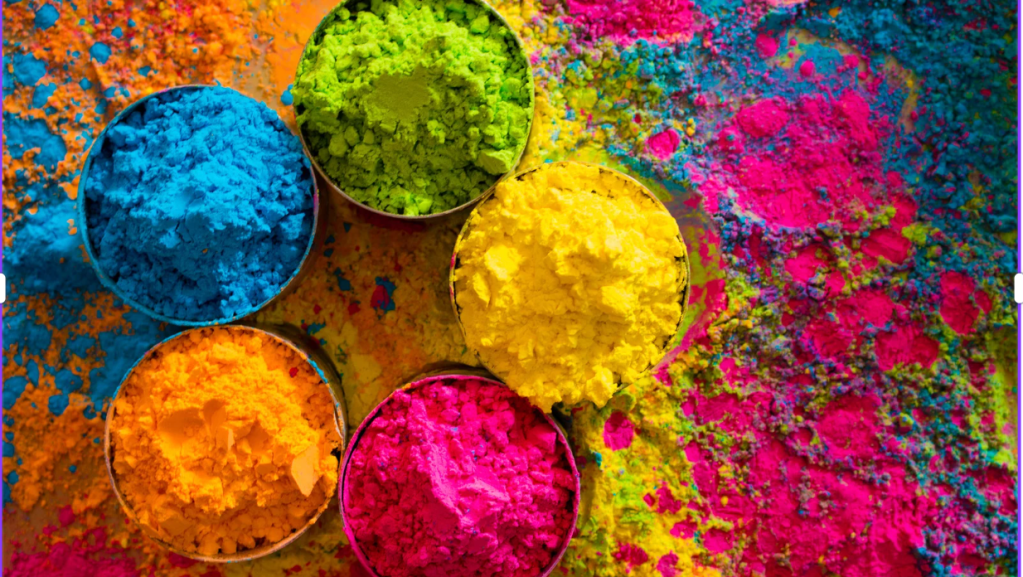
When I began thinking about this journey, I thought it would be mostly about paint — about learning techniques again, experimenting with texture paste, remembering how to mix colours without making muddy tones. But already, I’m realising that painting is less about what I put on the canvas and more about what rises up inside me when I do.
A few days ago, my two-year-old daughter looked at me and said, “Mummy, you’re my favourite colour. You’re yellow.”
I don’t think anyone has ever said anything so beautiful to me.
It caught me off guard — that small, innocent sentence. The way she said it so simply, as though it was the most natural truth in the world. She just smiled and went back to playing after, leaving me sitting there wondering what it means to be yellow.
I thought about warmth. About sunlight. About the kind of brightness that feels soft, not blinding. Maybe she sees me that way — or maybe she sees the parts of me I’ve forgotten how to see myself.
That’s the thing about colour — it holds meaning far beyond what we can explain.
Colours and What They Whisper
People often say colours have their own language. Red is anger or passion. Blue is sadness. Green is growth. But it’s not that simple, is it? Each shade speaks differently depending on who we are, where we’ve been, and what we need to feel.
When I see red, I don’t only see rage. I see warmth and courage and the pulse of being alive. It can be love and fury at the same time — a reminder that the heart still beats, even when it aches.
Blue has always been the colour of melancholy in art and language. “Feeling blue,” they say. But to me, blue feels safe — like the sea, like dusk, like a deep breath after a long cry. It’s the colour that tells me it’s okay to rest.
Green is healing. It’s the hum of nature that doesn’t rush — grass after rain, moss on stone, the steady persistence of growth. It’s calm and grounded, yet quietly full of life.
Yellow, my daughter’s colour for me, feels like possibility. It’s hopeful without being loud — like morning light through a thin curtain. It’s the colour that returns after a dark winter.
Orange is the warmth of connection — creativity, shared laughter, energy that feels human and real. It’s a hug of a colour.
Purple is introspection. It sits between warm and cool — somewhere between dream and reality, logic and longing. It feels spiritual, the colour of asking questions and being okay not having all the answers.
Pink is gentleness, but not weakness. It’s the softness of healing — the part where the wound begins to close but still needs care.
And black — black is not just darkness. It’s depth. It’s silence. It’s the space from which all things emerge. Without black, no colour could ever shine.
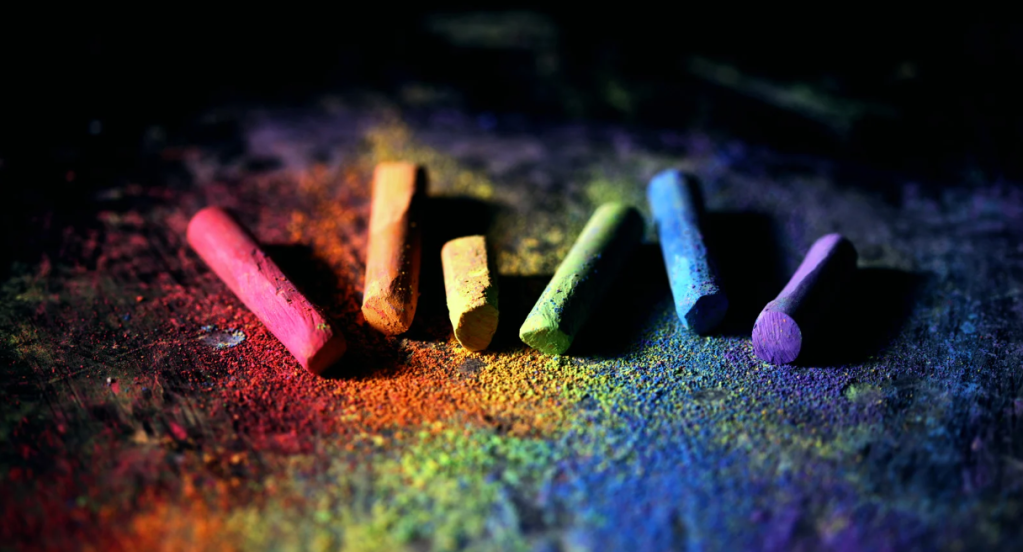
The Personal Palette
But here’s what I keep reminding myself: there is no universal truth in colour. What comforts one person might unsettle another. What feels joyful to me might feel lonely to you.
A childhood bedroom painted blue. A dress worn on a terrible day. The yellow of a hospital wall. The red of someone’s car driving away.
We carry these associations quietly, and they shape the way colour reaches us. That’s what makes painting such a personal act — I’m not just mixing pigments, I’m mixing memory.
Painting as Emotional Language
My therapist asked me to journal, to write about how I feel. But there are days when words feel stiff and small, when I can’t seem to reach the right ones.
Colour, though — colour lets me speak in another way.
Some days, the page turns dark before I even realise what I’m feeling. Other days, light spills in where I didn’t expect it. Sometimes the paint dries muddy, and that’s okay too. Healing isn’t tidy — it’s layered, uneven, sometimes blurred at the edges.
Through painting, I’m learning that emotion doesn’t always have to be translated into language. It can live in tone, texture, movement — in the way I mix yellow and white until it feels like morning, or drag a palette knife through blue until it feels like release.
Maybe that’s what this journey is really about: learning to feel in colour again.
A Note to Myself
I keep thinking back to what my daughter said — “You’re my favourite colour.”
Maybe that’s what I want from this journey: to become someone’s favourite colour again, even if that person is me.
Healing doesn’t always look like progress.
Some days, it’s simply allowing a colour to hold what words can’t.
It’s okay if the page stays half-painted, or if today’s hues don’t match the way you hoped to feel. What matters is that you showed up — that you gave form, even briefly, to something invisible inside you.
Maybe tomorrow it will be a brighter yellow. Maybe not. But either way, you’ll have spoken in your own language — and that’s enough.

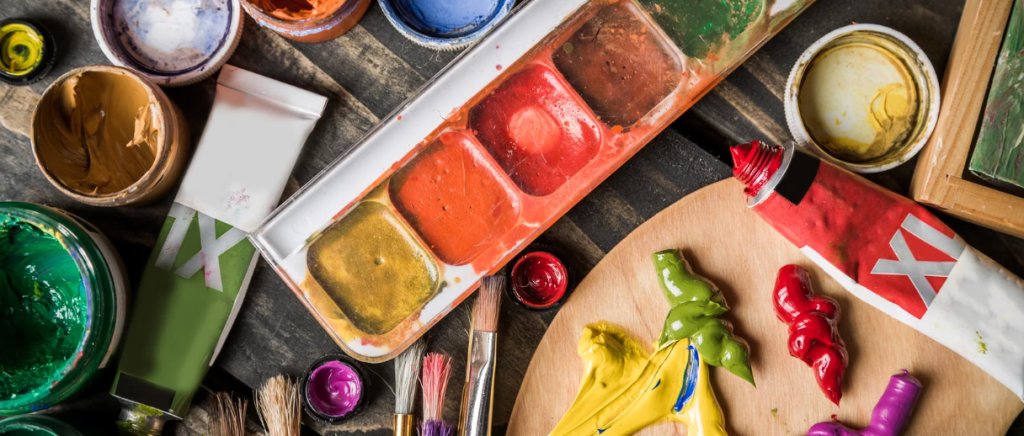
 She Heals In Hues
Leave a comment